A First Make-and-Share Afternoon, Planned Around One Table
Plan a first make-and-share afternoon around one table, with a welcoming activity, simple shared supplies and a calm finish that leaves people keen to return.
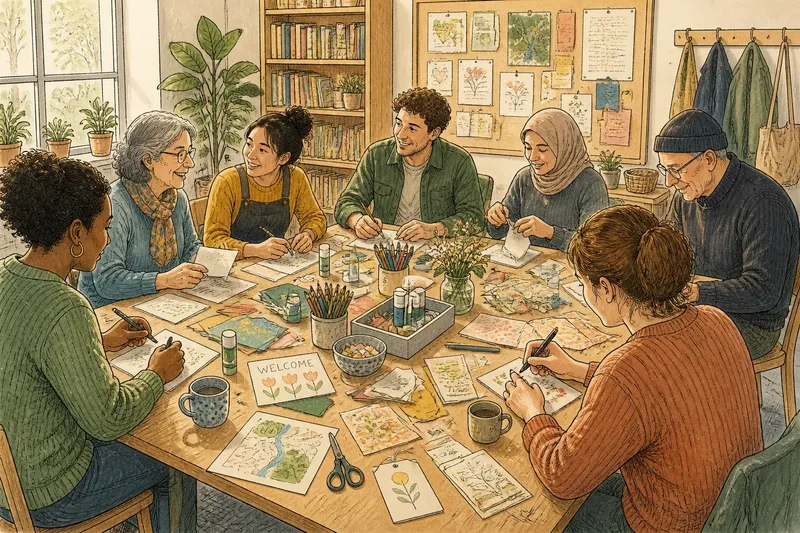
A first make-and-share afternoon works best when one table gives everyone a place to arrive, try something and talk without needing to produce a finished object. Choose a forgiving activity, prepare a small set of materials and leave enough room at the end for people to tidy together. The point is a pleasant shared hour, not a display of polished results.
What makes one table enough?
One table gives the gathering a natural centre. People can see the materials, notice what others are doing and ask for help without crossing a room or joining a formal lesson. It also sets a useful limit: plan for the space you have rather than inviting more people than the activity can comfortably accommodate.
Before inviting anyone, sit at the table and imagine the whole afternoon. Where will coats go? Can someone pull out a chair without bumping into a pile of supplies? Is there a clear spot for cups, and somewhere nearby to put completed or unfinished work? A corner of a community room, a library meeting space or a kitchen table can all work if there is room to move around it.
Keep the centre open enough for people to share materials. Put only the supplies needed to begin on the table; store extras in a tray or box within reach. If the work involves paper, for instance, set out a few sheets, pencils and safe scissors rather than every craft item you own.
Which activity suits a first gathering?
Pick an activity that is easy to start, easy to pause and satisfying in more than one form. Paper collage, simple mending on a practice scrap, decorated labels for a community cupboard or small folded-paper decorations all let participants make choices without needing a common skill level.
Avoid making the activity depend on everyone finishing a matching object. A shared prompt can bring people together while leaving room for different results: make a card that welcomes a new neighbour, or create a paper tag showing something useful about the local area. Anyone who would rather chat first can watch, then join when ready.
Say you are hosting in a library room and choose a paper-and-pencil activity. You lay out plain cards, coloured paper, glue sticks and a few pencils, then invite people to make a small note for a communal noticeboard. Someone might draw a map, another might write a welcome, and a third might simply explore the materials. The observable result is a table of distinct contributions and conversation, not a set of identical cards.
How should the invitation sound?
Make the invitation concrete and low-pressure. State the place, the general activity, what is provided and whether people may bring a small project of their own. Say plainly that beginners are welcome and that finishing is optional. If someone needs an access adjustment, offer a straightforward way to ask before the day.
Do not imply that people must bring specialist equipment or stay for the whole session. A useful invitation might say: “Join us for a relaxed paper-making afternoon around one table. Materials are provided; come to try the activity, watch or work on a small project. We will tidy together before we leave.” Add any practical details about the venue so visitors can find the room and know what to expect.
Keep the group small enough for everyone to be heard. If interest exceeds the available chairs, explain the limit kindly and consider another gathering rather than squeezing extra people around an awkwardly crowded surface.
How can newcomers feel welcome?
Welcome people at the door, show them where to put their things and introduce them to someone already seated. Then point out the materials and offer a simple starting choice. “Would you like to try a card, or have a look first?” gives a newcomer control without putting them on the spot.
Let conversation develop at its own pace. Some guests will begin making straight away; others may need a few minutes to settle. Resist giving a long demonstration unless the activity needs one. A brief example made from the same materials can answer basic questions while leaving the table open to individual ideas.
Think about small practical comforts as part of the welcome. Keep a clear path to the door, leave a seat that is easy to reach and place drinks away from the work area. For an activity with sticky or loose materials, a washable cloth and a small scrap bowl make the table feel less precious and easier to use.
When should the afternoon end?
Give the gathering a visible ending, but do not let the clock dictate the mood. Mention the planned finish in the invitation and give a gentle reminder before tidying begins. That allows people to finish a thought, leave a project safely unfinished or decide whether they can stay to help.
Make cleanup part of the shared activity rather than an invisible job for the host. Ask guests to return unused supplies to the tray, collect scraps and wipe their own spot. Keep the tasks ordinary and safe; anything that depends on a product label, venue rule or specialist handling should follow that guidance.
Set aside a small place for work that needs to dry or travel home. Ask each person what they would like done with their piece, rather than assuming it belongs on display. A quick closing question—what was pleasant, or what would make another afternoon comfortable?—can gather useful impressions without turning the farewell into a formal review.
What should you prepare beforehand?
A modest preparation list can prevent last-minute searching while keeping the event light:
- Confirm the room, access details and the time guests can enter.
- Count the chairs and leave enough space to sit down and stand up comfortably.
- Choose one activity with an easy starting point and optional ways to continue.
- Gather only the basic materials, plus a small reserve of commonly used items.
- Set out a tray or box for supplies and a separate container for scraps.
- Choose a place for coats, drinks and unfinished work.
- Plan a friendly welcome and a brief reminder before cleanup.
Check the room’s arrangements and any instructions that apply to the materials or activity; follow the venue’s rules and the maker’s guidance where relevant. Beyond that, preparation is mainly about making the first choice obvious and the last few minutes unhurried.
What if the table goes quiet?
A quiet patch does not mean the gathering has failed. People may be concentrating, waiting to see how an unfamiliar material behaves or simply enjoying a pause. Let the silence sit for a moment before offering a light prompt such as, “What could this paper become?”
If the activity feels too open-ended, offer two small options rather than taking over: draw a shape, or tear and layer paper. If someone is unsure, show one possible move with spare material, then hand the decision back. The aim is to make starting easier, not to make everyone follow the host’s version.
For a first make-and-share afternoon, one table is enough when it supports a welcome, a choice of ways to participate and a shared cleanup. Keep the activity simple, the invitation honest and the ending kind. A comfortable gathering leaves people with room to talk about what they might enjoy making together next time.